School and office
Report Covers, Pocket Folders or Binders: Which One for the Job
Prongs, sliding bars, clamps and zippers compared by sheet capacity, durability and what a teacher or a client sees first.
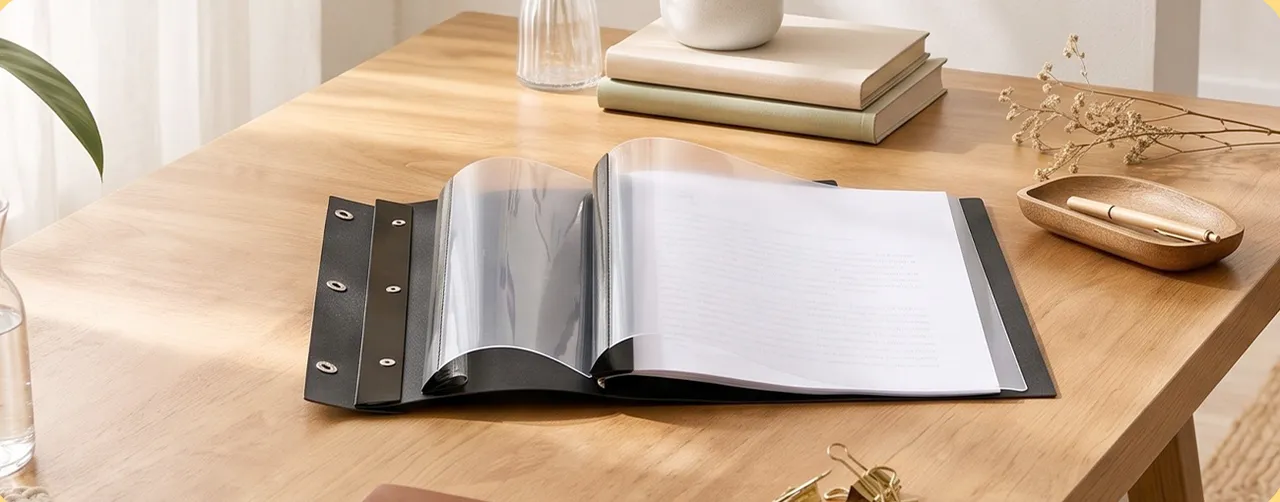
Every school year and every office quarter starts with the same small decision: what do you put the paper in? A report cover, a pocket folder and a binder all hold letter-size pages. They look alike on a shelf. In use they behave very differently, and the wrong one turns a finished report into a loose pile or a simple homework system into a binder nobody opens.
This guide compares the three by what they hold, how they hold it, and who they suit. The Teling team makes all three, plus sheet protectors and dry erase pockets, so the numbers below come from the details we publish for each set: how many sheets each set takes, what it is made of, and how big it is. Where we do not know something, we say so.
The short answer
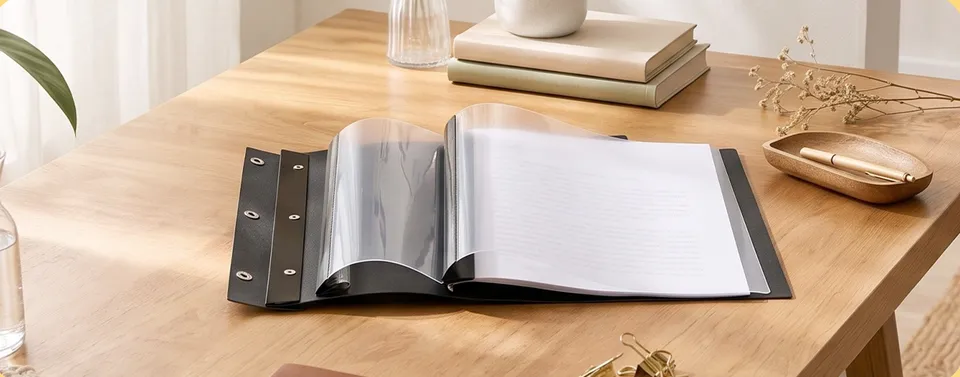
If you need a document to look finished when you hand it over, use a report cover. If you need to carry loose papers back and forth, use a pocket folder. If you need to keep adding pages to the same file for weeks, use a binder. The table below puts our sets side by side.
| Set | Type | Holds | Needs punched pages | Best for | From |
|---|---|---|---|---|---|
| Clear Front Report Covers with 3-Prong Fasteners | Report cover, 3 prongs | A stack of punched pages | Yes | Reports and resumes with a title page on show | $23.99 |
| Report Covers with Pockets and 3 Prongs | Report cover with pockets | Up to 90 sheets | Yes | Projects with loose extras: notes, handouts | $30.99 |
| Sliding Bar Report Covers | Sliding bar cover | About 20 sheets | No | Short reports you hand in and forget | $28.99 |
| Two-Pocket Plastic Folders with Clear Front | Two-pocket folder | Loose sheets in two pockets | No | Homework, forms, take-home papers | $30.35 |
| Heavy Duty Folders with Pockets and Prongs | Folder with pockets and prongs | 80+ sheets | Yes | A whole subject in one place | $33.99 |
| Punchless Clamp Binders | Punchless clamp binder | 100 letter pages | No | Files you add to and flip through | $25.99 |
| 1-Inch Zipper Binders with Handle | 1-inch zipper binder | Up to 250 sheets | Yes | Papers that travel, plus pens | $19.99 |
Two columns matter more than they look. Sheet count decides whether the tool closes at all, and punched pages decide whether you need a hole punch nearby. A sliding bar cover is the only report cover that takes unpunched paper, and it holds the fewest sheets.
Report covers: for the finished document
A report cover is a presentation tool. Its job is to make a stack of pages look like one thing. The clear front shows the title page, the back is solid, and something holds the pages in the middle. That something is the main choice.
Three-prong covers
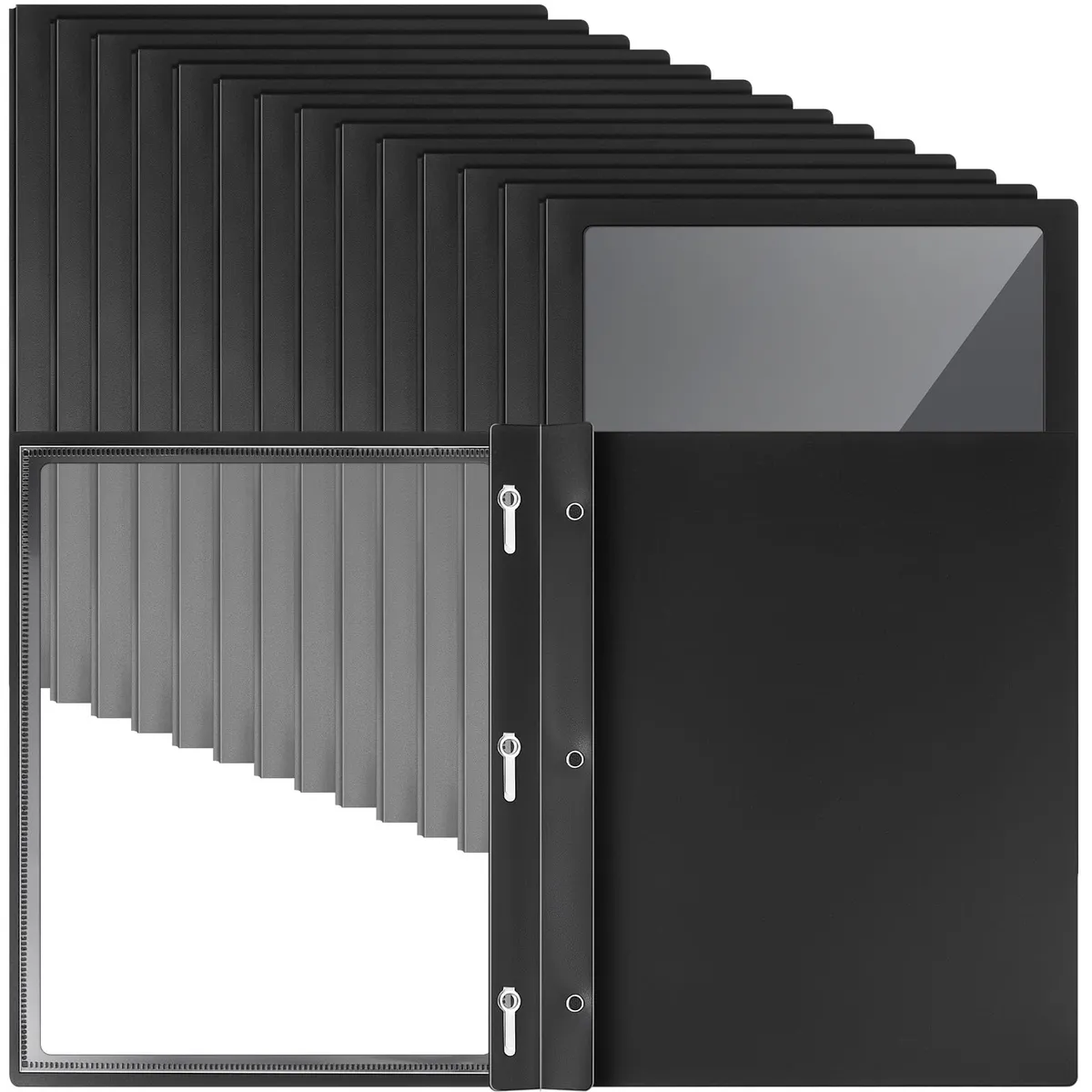
Prong covers are the classic school and office report cover. You punch the pages, slide them onto three metal or plastic prongs, and fold the prongs flat. Our clear front report covers measure about 11.4 x 9.5 inches, a letter-size fit, and are made of clear PP plastic on the front with PP on the back. You can loosen the prongs and take a page out at any time, which makes them forgiving if you spot a typo after printing.
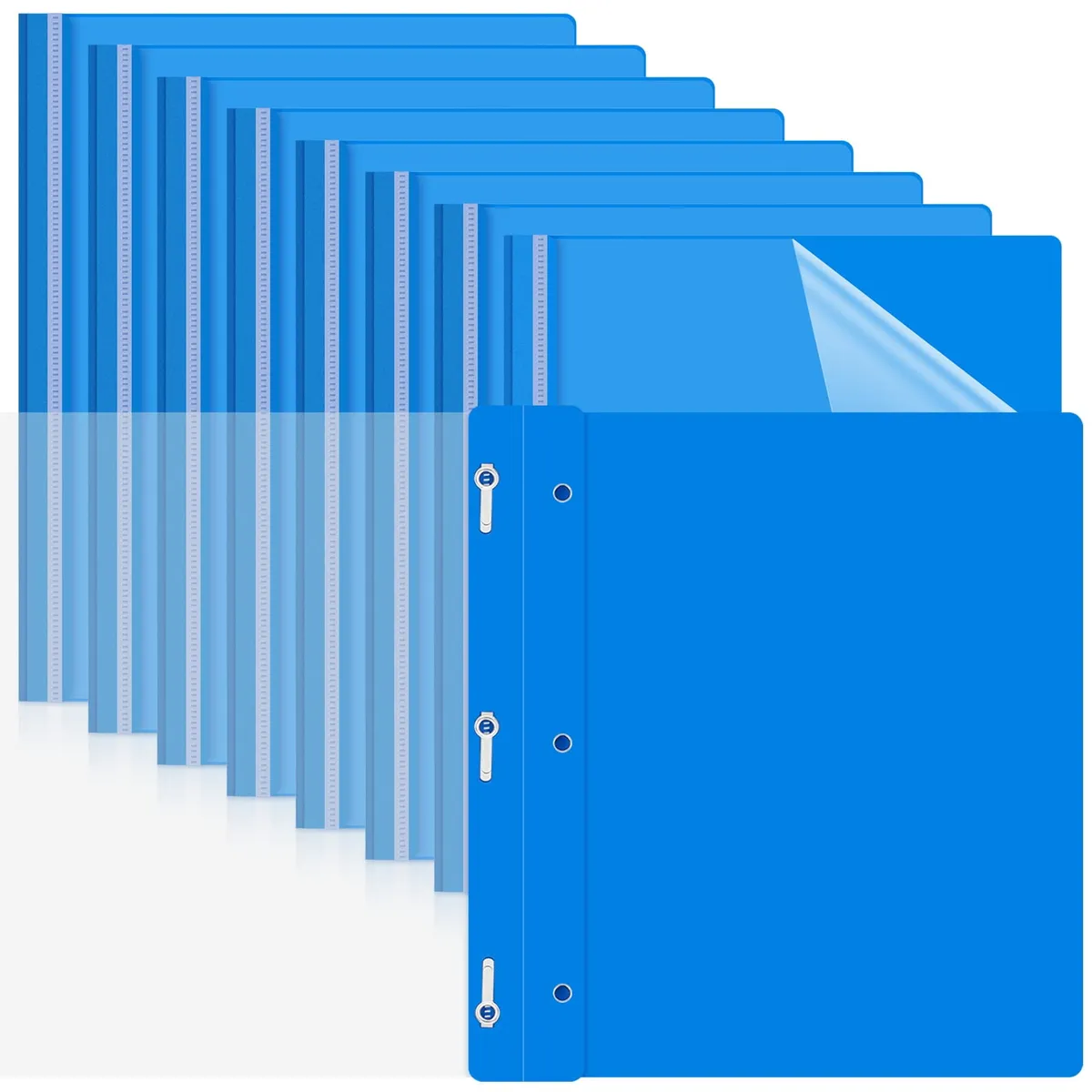
The frame-view covers work the same way with a framed clear window, about 9.4 x 11.5 inches. Teachers often pick them for a class set because the frame looks a step more formal than a plain clear sheet.
Covers with pockets
Some projects come with extras: a printed handout, a few receipts, a business card. Our report covers with pockets hold up to 90 sheets on three prongs and add pockets, including a slash pocket inside the back. They suit a science fair report with loose data sheets or a client proposal with a brochure tucked in.
Sliding bar covers
A sliding bar cover skips the hole punch. You line up the pages, slide a plastic bar along the left edge, and the bar grips them. It is the fastest way to bind a short report. The trade-off is capacity: our sliding bar covers hold about 20 sheets each, and a thick report will push the bar off.
Pocket folders: for papers on the move
A pocket folder is a carrier, not a binder. Sheets sit loose in pockets, which makes it quick to drop in a permission slip or pull out a form. It is the tool of homework folders and conference welcome packs.
Our two-pocket plastic folders are made of polyethylene, measure about 12 x 9.5 inches and fit letter-size paper. The clear pocket on the front takes a title sheet or a class label, and a built-in slot inside holds a business card. Color matters here more than anywhere else: one color per subject or per department lets a student or a receptionist grab the right folder without reading a label.
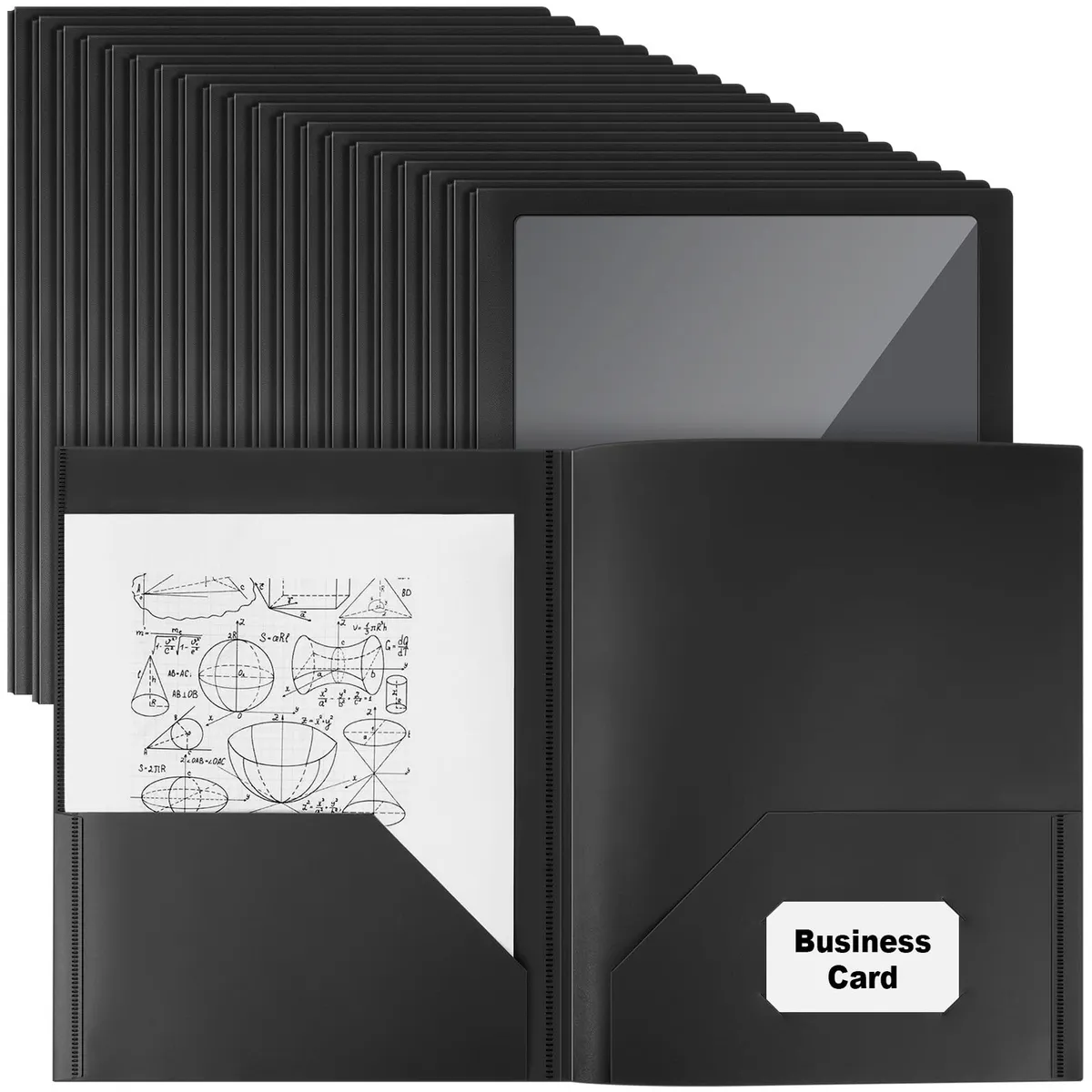
When a folder needs to hold its papers in order, not just carry them, step up to a folder with prongs. Our heavy duty folders with pockets and prongs are made of 0.4 mm polyethylene and hold 80 or more letter-size sheets on prongs, with two deep pockets for the loose ones. They sit between a folder and a binder: thin enough for a backpack, organized enough for a full unit of notes.
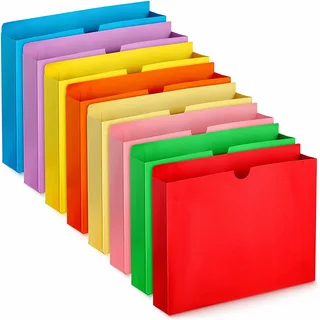
For paper that leaves the backpack and goes into a drawer, our expanding file folders are a different animal. They are made of paper, measure about 11.75 x 9.5 inches and expand by 2 inches, enough for more than 100 sheets on one side. They come 40 to a pack in 8 colors and suit tax papers, receipts and anything that gets filed and left alone.
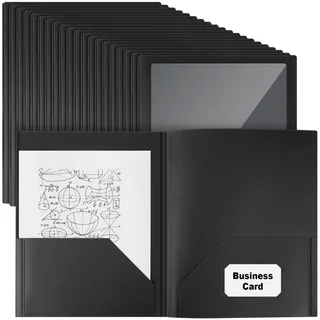
Two-Pocket Plastic Folders with Clear Front
48 pieces · 10 options · From $30.35
See This Set on Amazon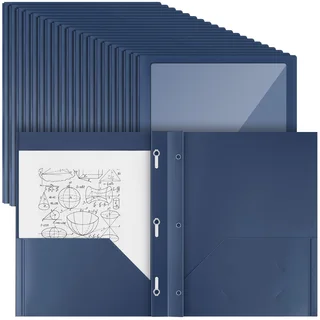
Binders: for files that keep growing
A binder is the right tool when the document is never finished. A course notebook, a project file or a recipe collection gains pages every week, and a binder takes them without a fight.
Zipper binders
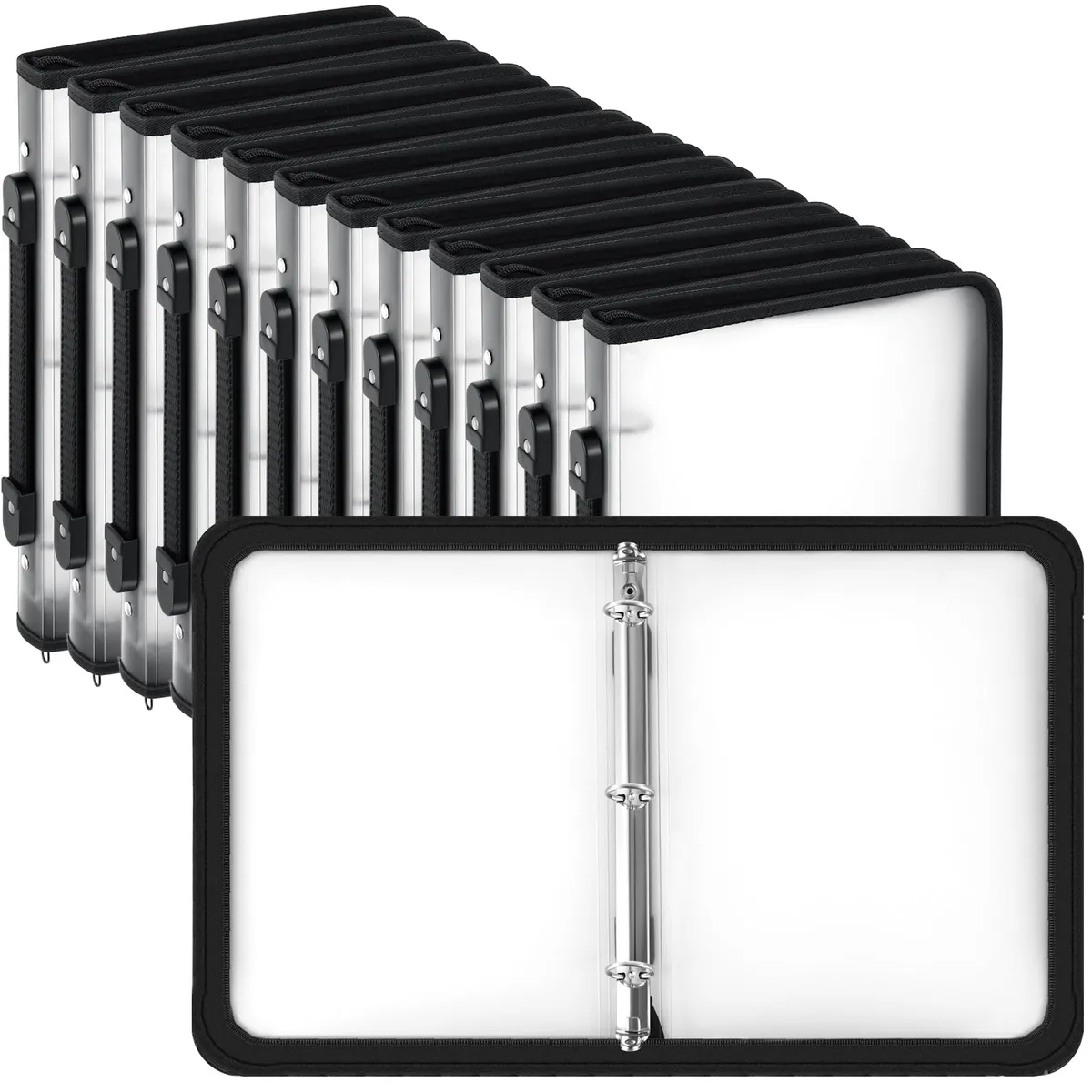
A zipper binder closes all the way around, so nothing slips out in a bag. Our 1-inch zipper binders measure about 11.26 x 9.57 x 1.5 inches, hold up to 250 sheets on three rings, and add a handle. Students like them because the pens and the calculator ride inside with the notes. They are the bulkiest option here, and a full one is heavy.
Punchless clamp binders
A clamp binder holds pages with a spring clip instead of rings. No holes, no rings to snag, and pages flip smoothly. Our punchless clamp binders measure about 11.5 x 9.7 x 0.6 inches and hold 100 letter-size pages behind an opaque poly cover. The solid cover keeps a file private on a desk, which suits HR forms or graded tests.
Leather ring portfolios
For a meeting where the binder itself is on show, a faux leather portfolio looks the part. Our leather 3-ring binder portfolios hold punched 8.5 x 11 inch pages on 1-inch rings and close with a button. They are one or two to a pack, not a class set, and they cost more per piece than plastic.
Sheets, pages and stack height
Capacity numbers count sheets, not pages. A sheet printed on both sides carries two pages. So a sliding bar cover that holds about 20 sheets fits a 40-page report printed double-sided, and a zipper binder that holds up to 250 sheets fits a 500-page course pack. Paper weight changes the math a bit: heavier paper, photo prints and card stock take more room than plain copy paper.
A quick way to check your stack is to measure it. A ream of 500 sheets of common copy paper stands about two inches tall. If your pile is a quarter of an inch, you have roughly 60 sheets, which rules out a sliding bar cover and fits a cover with pockets or a clamp binder.
Hole punches and prongs
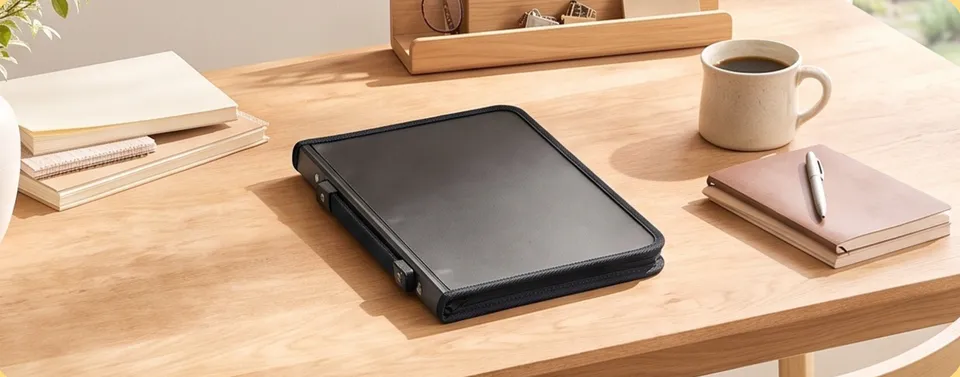
Prong covers and ring binders both need punched paper, and a clean punch makes the difference between a report that turns smoothly and one that tears at the holes. A desktop three-hole punch handles a small stack at a time. Feed it a few sheets, not the whole report, and line the paper up against the guide every time.
If a page tears at a hole, you do not have to reprint it. Paper hole reinforcements, the small ring stickers sold for binders, mend the tear in seconds. For a report you hand in, reprinting the page still looks neater.
Prongs bend if you force too many sheets onto them. When the prongs no longer fold flat over the stack, the cover is full. Move the extra pages to a second cover or step up to a binder.
Sheet protectors and dry erase pockets
Some pages should not be punched at all: a certificate, a photo, a menu, a child’s drawing. A sheet protector holds them flat behind clear plastic. Our rigid sheet protectors fit 8.5 x 11 inch paper and load from the top. They are stiff enough to stand on a shelf or slide into a frame, and they come in sizes for 8 x 10 photos too.
Note what they lack: binder holes. They are display sleeves, not binder pages. If you want sleeves that go into rings, look for punched page protectors instead.

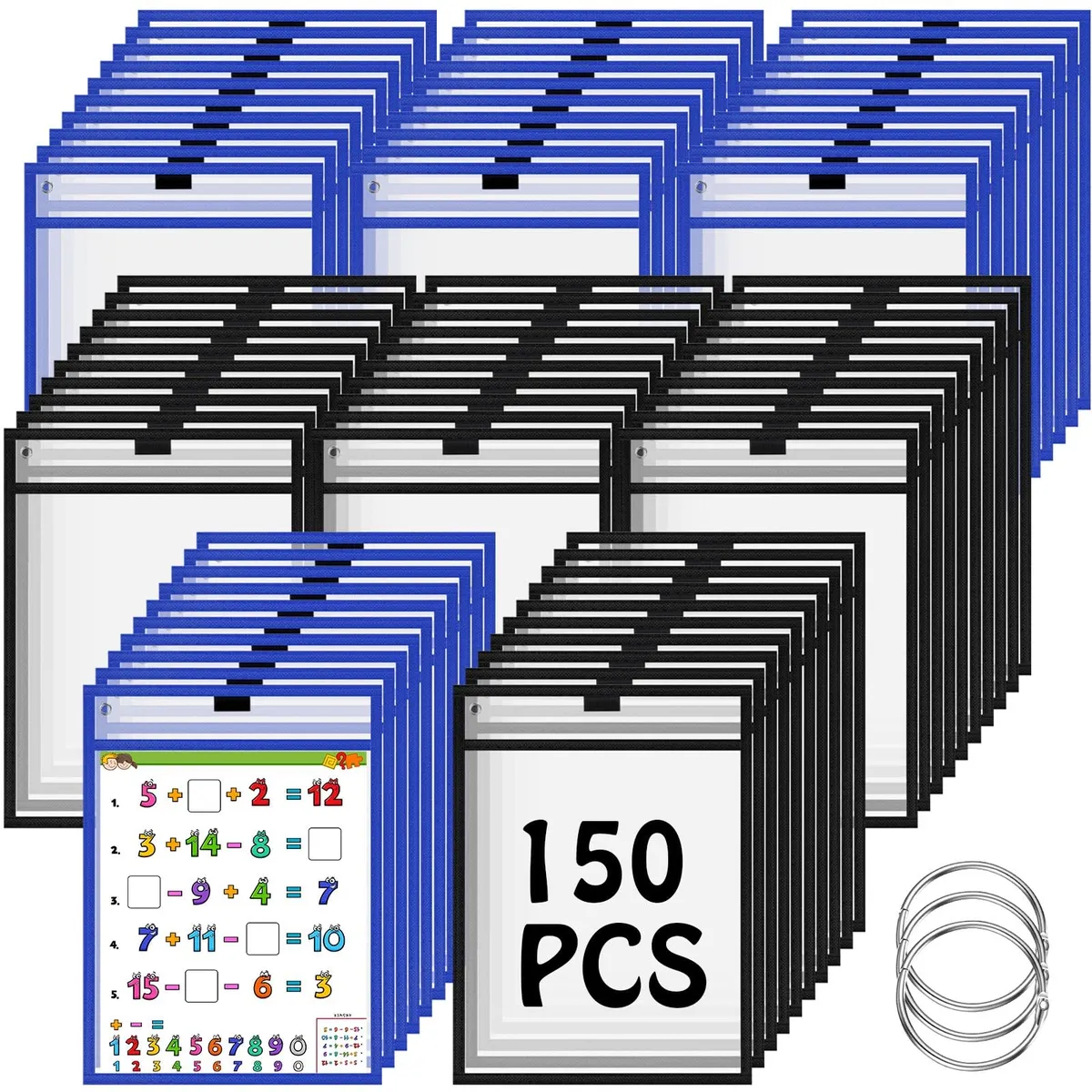
Dry erase pockets are a classroom favorite with a different job. A worksheet goes inside, students write on the pocket with a dry erase marker, and a wipe clears it for the next round. Our dry erase pockets measure about 10 x 14 inches, take letter-size or A4 sheets, and come with marker loops.
Which plastic matters for long storage
For a report you hand in on Friday, the plastic barely matters. For papers you want to keep for years, it does. Library and archive staff have looked hard at which plastics sit safely next to paper and photographs, and the Library of Congress sums up its guidance in one line:
“Suitable plastic enclosures are made of uncoated polyester, polyethylene, and polypropylene.”
Here is how our filing sets line up against that list. Our report covers are polypropylene, which is on it. Our two-pocket and heavy duty folders are polyethylene, also on it. Our rigid sheet protectors are PVC, which is not on the list, so treat them as display sleeves for menus, signs and pages in daily use, not as archive storage for family documents. Paper expanding folders are a different case again and come down to the paper itself.
Polyester has its own catch, and the Library of Congress spells it out in its advice on storing paper:
“Polyester film has the benefit of being clear but does not contain an alkaline buffer and with little friction readily produces an electrostatic charge that can lift powdery media such as pastel, charcoal, pencil, and flaking paint.”
In plain terms: a slick clear sleeve can pull loose pencil or chalk off a drawing. Keep pastel and charcoal artwork in paper folders, and save clear plastic for printed pages.
Choosing for a classroom
Teachers buy filing supplies in class sets, and the count drives the choice as much as the type. A class of 24 needs 24 of something, plus spares for new students and spills. Our report covers come in boxes of 24 to 150, our two-pocket folders in 24 or 48, and our zipper binders in packs of 4 to 12.
- Homework folders: two-pocket poly folders, one color per subject
- Unit notes that build all term: folders with pockets and prongs
- Final projects: clear front report covers, so the title page shows
- Worksheets used again and again: dry erase pockets
- Take-home reading: our clear book pouches do the job a folder cannot, with handles and a name tag
If parents are buying from a supply list, name the type, not just the word folder. A list that says folder gets you a mix of paper, plastic, pockets and prongs, and the class ends up with no system at all.
A filing system for a whole school year
The best classroom filing systems are boring in the right way. Every student has the same folders, in the same colors, for the same jobs, from the first week to the last. Here is a simple system that teachers and parents can set up in an afternoon.
- Pick one color per subjectBlue for math, green for science, red for reading, and so on. Write the color list on the supply sheet so every family buys the same.
- Give each subject a folder with prongsNotes and graded work go on the prongs in date order. Loose handouts ride in the pockets until they get punched.
- Add one two-pocket homework folderLeft pocket for work to do, right pocket for work done. It goes home every night and comes back every morning.
- Keep finished projects in report coversWhen a project is graded and returned, it moves into a clear front cover, so it stays clean for the end-of-year portfolio.
- Store the year in an expanding folderAt the end of each term, the prong folders empty into one expanding file per student, labeled by term.
The system costs less than it sounds, because each piece comes in a class-size pack. And it saves the September scramble when every student shows up with a different kind of folder and nothing matches.
Color coding that works
Color is the fastest filing system there is. Your eye finds a red folder on a desk before you could read a label. The trick is to keep the scheme small and stick to it. Five or six colors are easy to remember. Twelve are not, and the system breaks down the first time someone grabs the wrong shade.
Match the color to something people already know. Many schools use the same subject colors from grade to grade, and offices often color files by department. If a color already means something in your building, borrow it rather than inventing a new one. Our two-pocket folders and heavy duty folders come in several solid colors, and our year stickers for file folders add a second code: the year, on the tab, in its own color.
Caring for plastic covers and folders
Plastic covers and folders need little care, but a few habits help them last a school year or longer. Wipe spills off right away with a dry or damp cloth: our PP report covers and poly folders have a smooth surface that wipes clean. Store them flat or upright in a box, not crushed under heavy books, because a bent clear front stays bent.
Keep plastic away from heat. A folder left on a car dashboard on a summer day can warp, and the clear front can cloud. And do not write on a clear cover with a ballpoint pen to label it. Slip a label sheet into the front pocket or use a sticker on the back instead.
Choosing for an office or a client meeting
In an office the first impression counts. A proposal in a clear front report cover reads as finished before anyone opens it. A resume in a frame-view cover stands out in a stack of loose sheets. Pick prongs for anything over a few pages and print a title page that fills the clear front.
For files that live on a shared desk, clamp binders keep pages in order without rings that pinch and snag. For papers that go home with you, a zipper binder holds the notes, the laptop charger and a pen in one case.
Resumes and job applications
A resume is short, and short documents tempt people to skip the cover. In a pile of loose sheets on an interviewer’s desk, though, a resume in a clear front cover is the one that stays together and stays clean. Use a frame-view or clear front cover with prongs, put the resume on top with the cover letter behind it, and add a page of references at the back.
For a portfolio of work samples, a cover with pockets holds the printed resume on the prongs and loose samples in the pockets. Bring two copies: one to hand over and one to talk from. If the interview is for a creative job, a faux leather ring portfolio lets you flip through samples in sleeves without taking them out.
Science fair and school projects
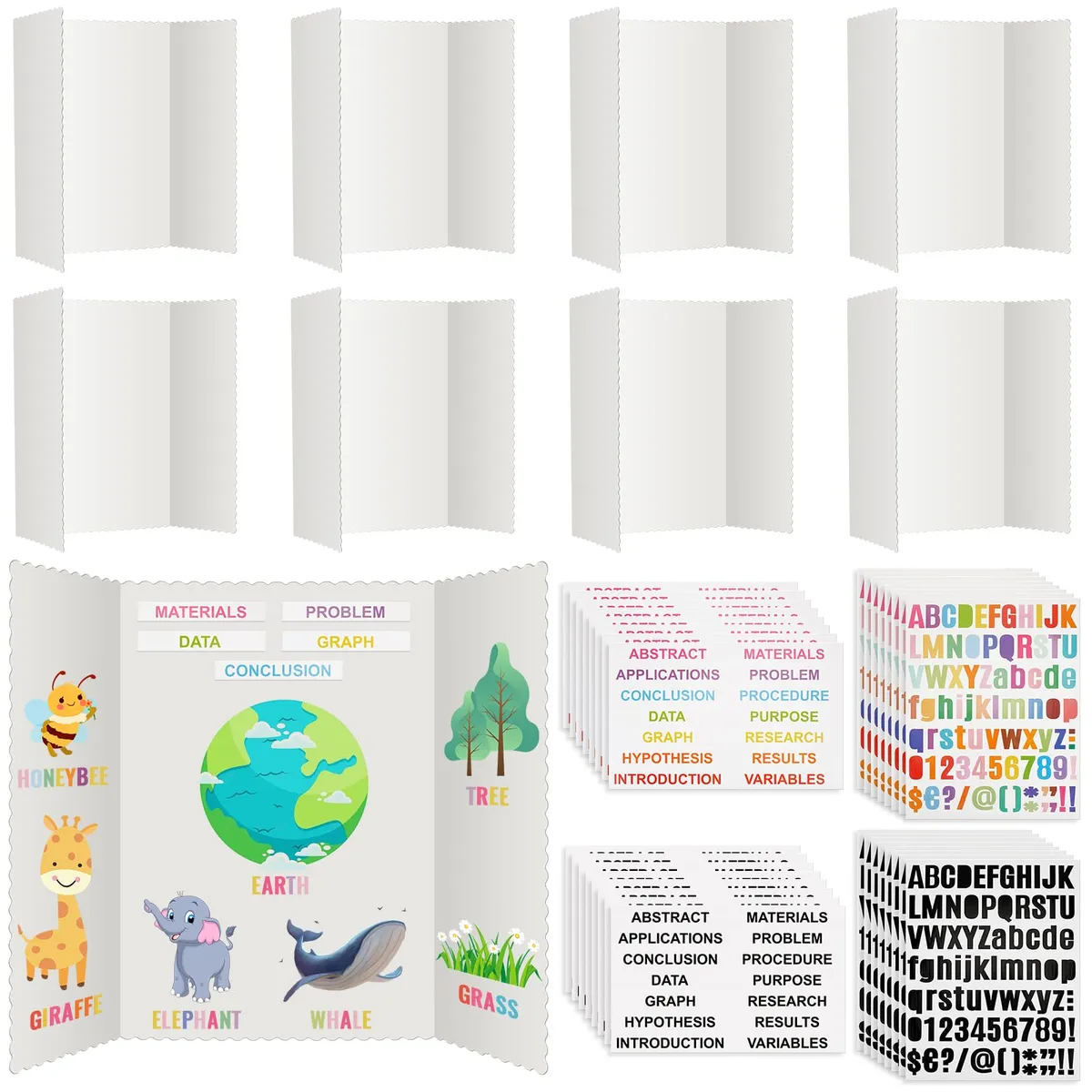
School projects mix printed pages with odd pieces: charts, photos, a sample of the data. A cover with pockets handles that mix best. The written report goes on the prongs, and the extras ride in the pockets so a judge can pull them out. For a display board project, our trifold poster boards stand behind the report on the table, and the report cover keeps the written part neat in front of it.
Teachers who collect a whole class of projects at once can ask for one cover color per class period. It makes sorting 120 reports on a Monday morning a ten-minute job instead of an hour.
Price per piece
Bulk packs win on price per piece almost every time, and the gap is wider than most buyers expect. The table below shows the pack with the lowest price per piece for each set on our last update. The math is simple: the pack price divided by the number of pieces.
| Set | Pack with the lowest price per piece | Per piece | Options |
|---|---|---|---|
| Clear Front Report Covers with 3-Prong Fasteners | 150 | $0.59 | 22 |
| Frame-View Report Covers with 3-Prong Fasteners | 72 | $0.92 | 16 |
| Report Covers with Pockets and 3 Prongs | 48 | $0.95 | 26 |
| Sliding Bar Report Covers | 48 | $0.80 | 6 |
| Two-Pocket Plastic Folders with Clear Front | 48 | $1.15 | 10 |
| Heavy Duty Folders with Pockets and Prongs | 48 | $1.25 | 6 |
| Punchless Clamp Binders | 12 | $2.83 | 6 |
| 1-Inch Zipper Binders with Handle | 12 | $5.67 | 17 |
Two cautions. A low price per piece only helps if you will use the pieces. A box of 150 report covers is a bargain for a school office and a closet problem for a single student. And prices change between our updates, so check the price at checkout before you decide.
Letter size, A4 and why it matters
US paper is letter size, 8.5 x 11 inches. Most of the world uses A4, which is taller and narrower. Covers and folders cut for letter paper hold A4 pages, but the A4 sheet can poke out at the top. Our filing sets are sized for letter paper, and a few, like the expanding folders and dry erase pockets, list A4 as well. If your printer runs A4, look for that word in the set details.
Common mistakes
- Overstuffing a sliding bar cover. Twenty sheets is the limit we list, and more pops the bar off.
- Punching pages off center. Line the stack up against the guide of your punch, or the pages fan out unevenly on the prongs.
- Buying binders for loose handouts. Papers that come and go every day belong in a pocket folder.
- Archiving keepsakes in PVC sleeves. Use polyester, polyethylene or polypropylene for anything you want to keep for years.
- Mixing types on a class list. One type per job keeps a class system working.
When to skip all three
Sometimes none of these is the right tool. A thesis or a manual that will sit on a shelf for years reads better spiral bound or printed as a book. A stack of photos does better in a photo album with sleeves made for prints. A single page to hand out at a meeting needs no cover at all. And papers that must stay secret belong in a locked drawer, not an opaque binder cover.
There is also the question of how long the paper needs to last. A permission slip lives for a week, a class project for a term, and a birth certificate for a lifetime. Match the tool to the lifespan. Cheap and quick suits the slip, a sturdy prong folder suits the project, and an archival sleeve in one of the plastics the Library of Congress lists suits the certificate.
For everything in between, the rule of thumb holds. Cover the finished document, carry the moving papers in a pocket folder, and keep the growing file in a binder. Browse our full report covers, pocket folders, binders and sheet protectors to match the count to your class or team, and see our guide to running a diaper raffle if a baby shower is on your list too.
Questions about school and office
What is the difference between a report cover and a binder?
A report cover holds one finished document of about 20 to 90 sheets behind a clear front. A binder holds 100 to 250 sheets and lets you add pages at any time.
Do report covers need hole-punched paper?
Our 3-prong covers do: the pages slide onto the prongs through punched holes. Sliding bar covers and clamp binders take unpunched paper.
Which plastic is best for keeping documents a long time?
The Library of Congress lists 3 suitable plastics for enclosures: uncoated polyester, polyethylene and polypropylene. Our report covers are polypropylene, while our rigid sheet protectors are PVC and suit display better than storage.
Sources
- Library of Congress, Care, Handling, and Storage of Photographs, read October 23, 2026
- Library of Congress, What type of enclosures should I use for my paper collections?, read October 23, 2026
More Teling guides

How to Run a Diaper Raffle at a Baby Shower
Tickets, the box, the prize and the wording on the invitation, step by step, with a table of how many diapers a raffle actually brings in.

Event Wristbands: Paper or Plastic, and How Many to Order
What each band type survives, how colors keep a door line moving, and a head-count table for parties, bars and festivals.