Events
Event Wristbands: Paper or Plastic, and How Many to Order
What each band type survives, how colors keep a door line moving, and a head-count table for parties, bars and festivals.
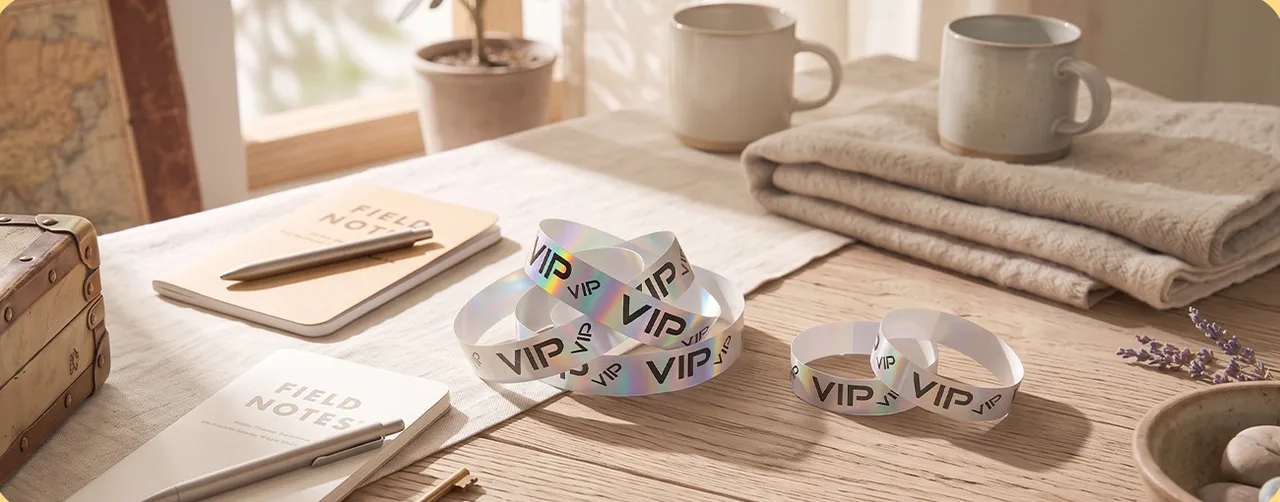
A wristband is the quietest piece of event gear you will buy. Nobody photographs it, nobody talks about it, and yet it decides how fast your door moves, whether the bar can serve without asking for ID twice, and whether a guest can step out for air and get back in. Pick the wrong band and you hear about it all night.
This guide covers the two choices that matter: what the band is made of and how many to order. Wristbands are Teling essentials for event crews: we make plastic and paper bands in packs of 200 to 1,200, so the sizes, materials and counts below come from the details we publish for each set. The head-count table near the end does the math for six common events.
Plastic or paper: what each band survives
Event bands come in two broad families. Plastic bands are thicker, shinier and feel more like a keepsake. Paper bands are thin, light and cheap per piece, and the better ones resist water and tearing. Both close with an adhesive tab. The table puts our bands side by side.
| Band | Material | Size | Look | Pack sizes | Per band |
|---|---|---|---|---|---|
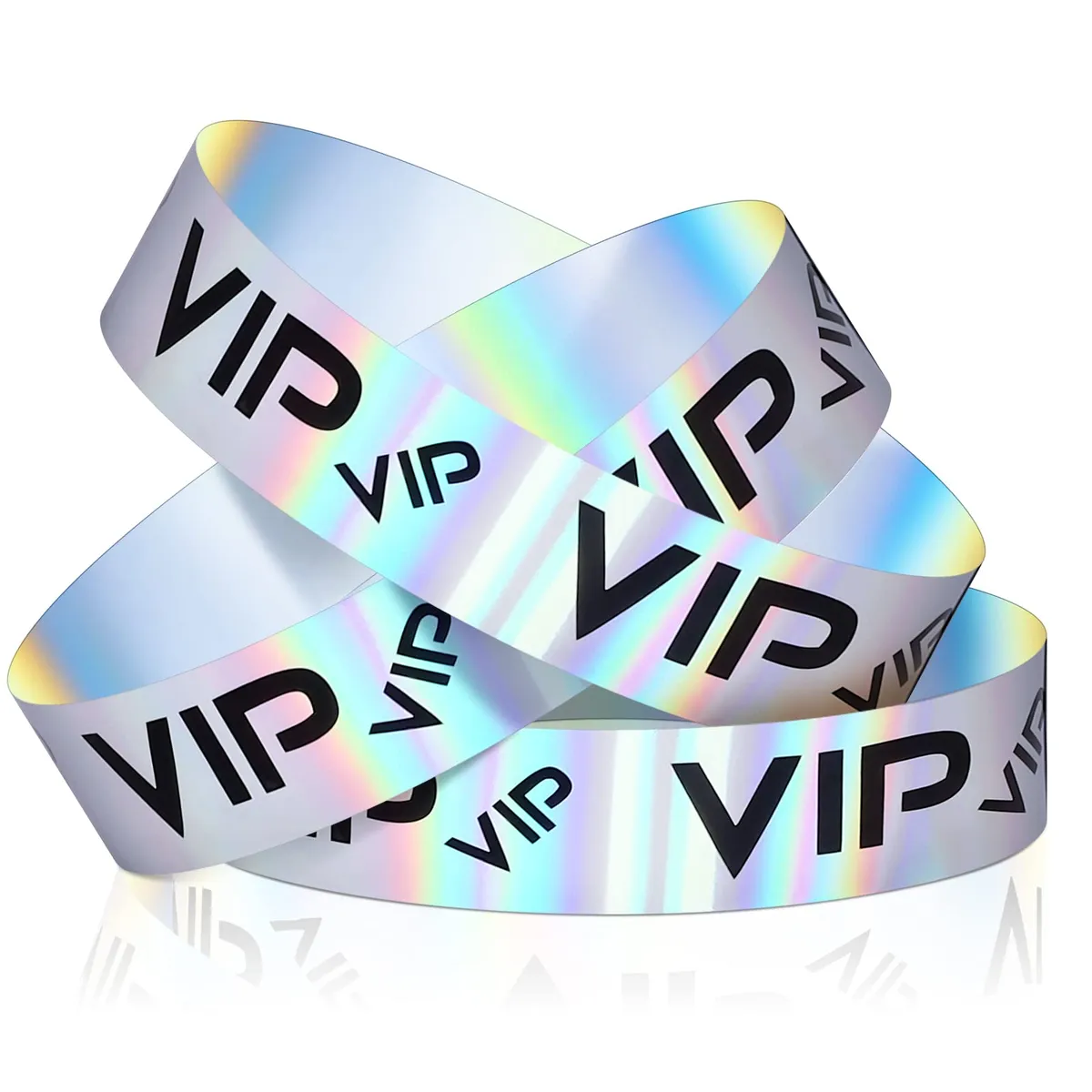
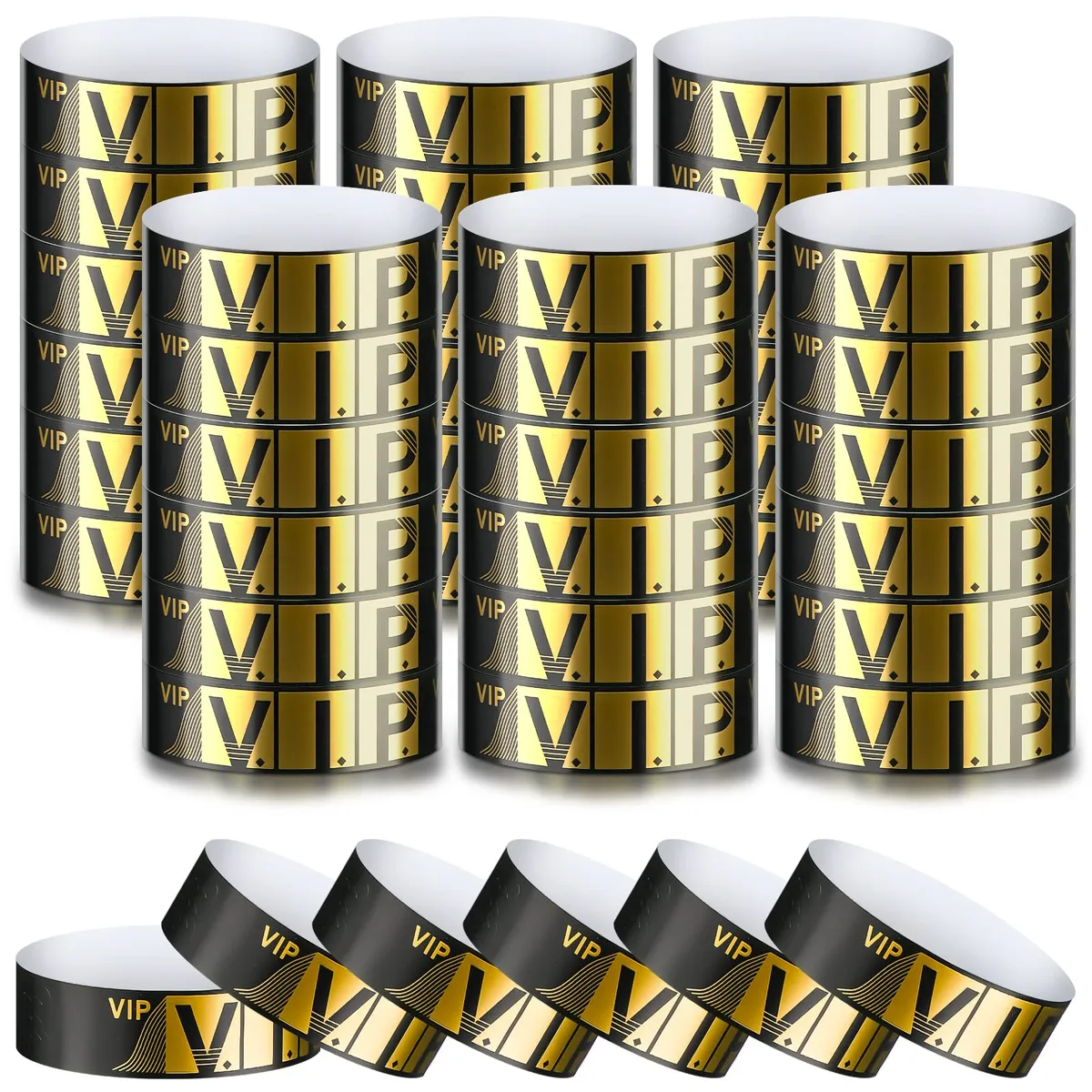
| VIP Plastic Wristbands | Plastic | 9.84 x 1.2 in | Holographic VIP print | 500 | from $0.032 |
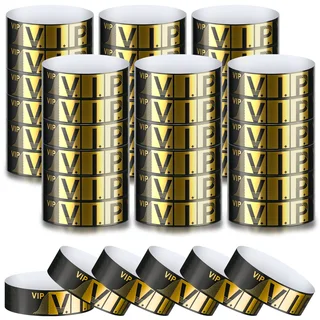
| VIP Paper Wristbands | Coated paper | 10 x 0.79 in | Gold and silver VIP print | 200, 600 | from $0.023 |
| Neon Paper Event Wristbands | Polyethylene fiber | 10 x 0.79 in | Six neon colors | 600 | from $0.021 |
| Over 21 Paper Wristbands | Paper | 10 x 0.79 in | Over 21 print | 600, 1200 | from $0.020 |
| Christmas Paper Wristbands | PVC paper | 10 x 0.79 in | Christmas prints | 500 | from $0.026 |
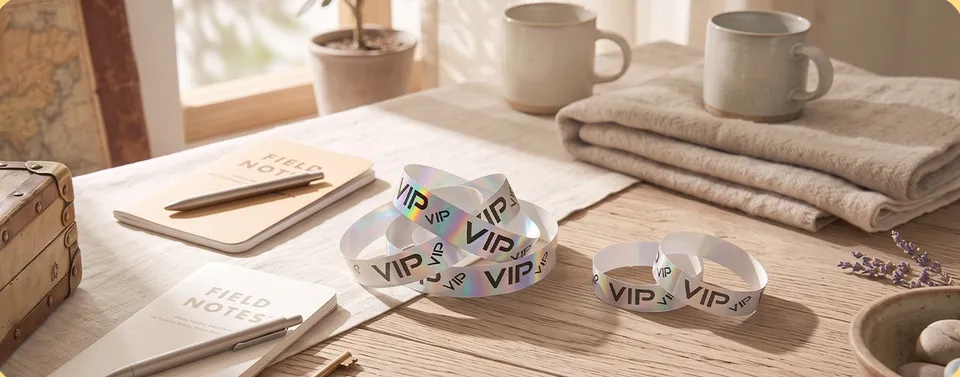
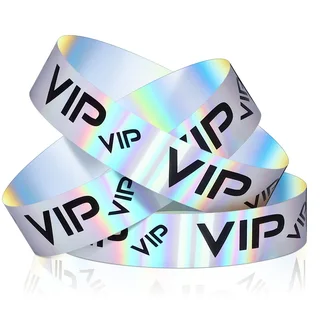
The word paper hides a range. Our VIP paper wristbands are coated paper, waterproof and light. Our neon event wristbands are high density polyethylene fiber, which looks like paper but behaves more like plastic film in the rain. Both measure about 10 x 0.79 inches. The VIP plastic wristbands are wider, about 9.84 x 1.2 inches, with a holographic finish that catches the light at a door.
When plastic is worth it
Plastic suits an event where the band is part of the experience. A VIP section, a launch party or a wedding after-party all benefit from a band that looks special. The holographic print shows up under club lights and in photos. Our plastic bands are waterproof and tear resistant, so they hold up at a pool party or a water park day.
When paper is the right call
Paper wins on count and price. A school carnival with 300 kids, a bar with a nightly over-21 check, or a fair that changes colors every day goes through bands fast. A pack of 600 or 1,200 paper bands costs a few cents per band, and color does the work that a fancy finish does at a VIP door.

How the adhesive tab works
Every band in our range closes the same way. One end has an adhesive strip under a peel-off backing. You wrap the band around the wrist, size it, peel the backing and press the tab down. On the plastic bands the adhesive strip is about 1.18 inches long, which leaves room to adjust the fit before it seals.
Once the tab is down, the band stays closed. That is the point: a band that slides off and onto another wrist defeats the purpose. To remove one, cut it. We describe the paper bands as a disposable design, made to be cut off after use, and the same goes for the plastic ones.
A good fit leaves room for one finger between band and wrist. That is snug enough to stop the band slipping off and loose enough for a long night. For kids, go a touch looser, since their wrists swell less predictably with heat and running around.
Choosing a look: holographic, metallic or neon
Beyond material, the print sets the mood. Holographic bands shift color as the wrist moves and read as premium. Gold and silver metallic prints look formal, which suits a gala, a wedding or a sponsor tent. Neon solids look playful and are the easiest to spot from across a room. Carnivals and fun runs use them for that reason.
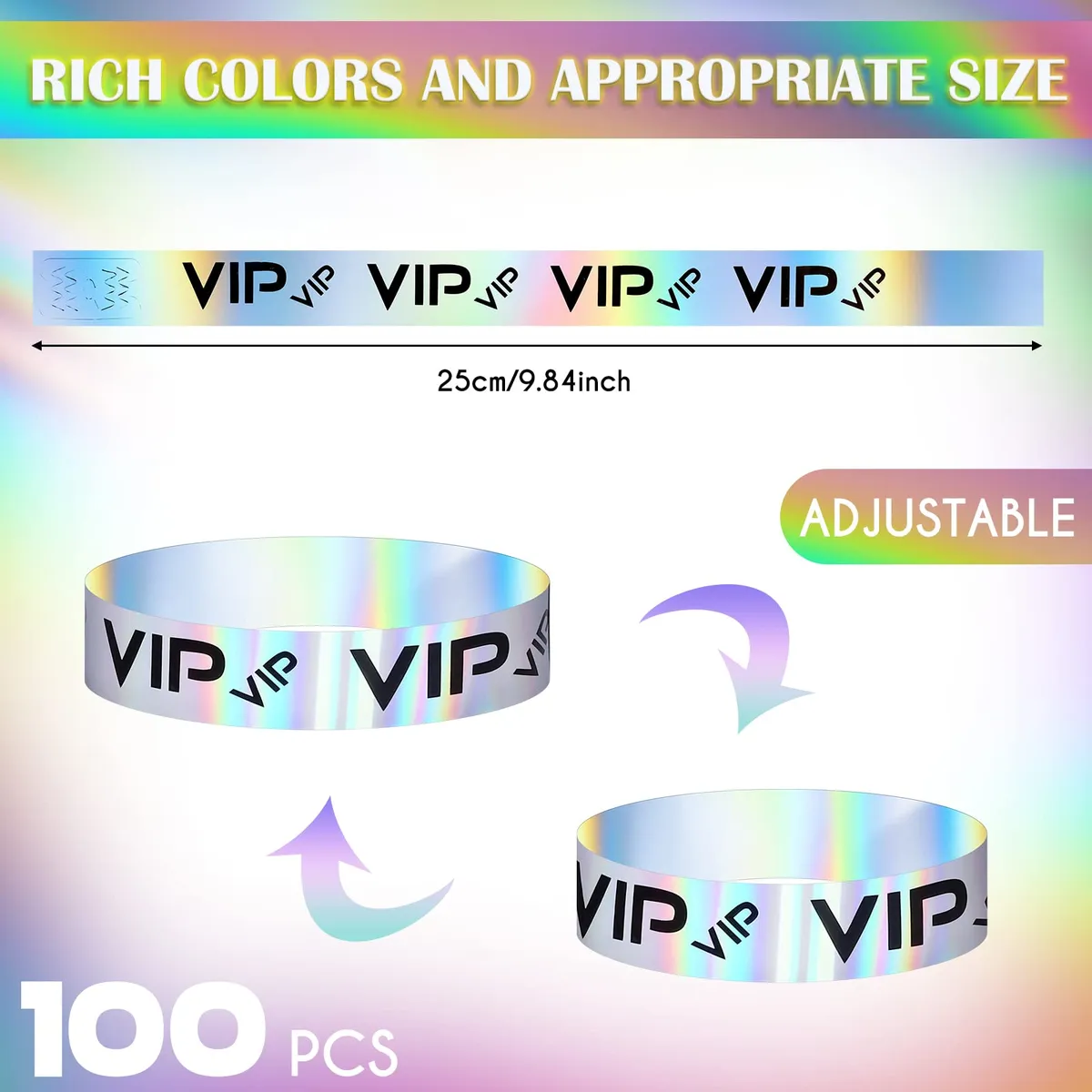
Match the look to the job, not just the theme. A VIP section needs a band that guests are proud to show, so a holographic or metallic print earns its cost. An all-ages check at a fair needs a band staff can read from ten feet away, so a solid neon color wins. Our VIP plastic wristbands come in 19 colors and finishes, from glitter silver to laser blue, which leaves room to give each zone its own shine.
Colors as a door system
The real power of wristbands is color. Door staff do not read a band, they glance at it. A system built on color lets one person check a crowd that would take three people with a guest list.
- One color per day at a multi-day event, so yesterday’s band does not get anyone in today
- One color per zone: general admission, VIP, backstage, staff
- One color per age group at a bar or a family event
- One color per ticket type at a fundraiser: dinner, dance only, sponsor
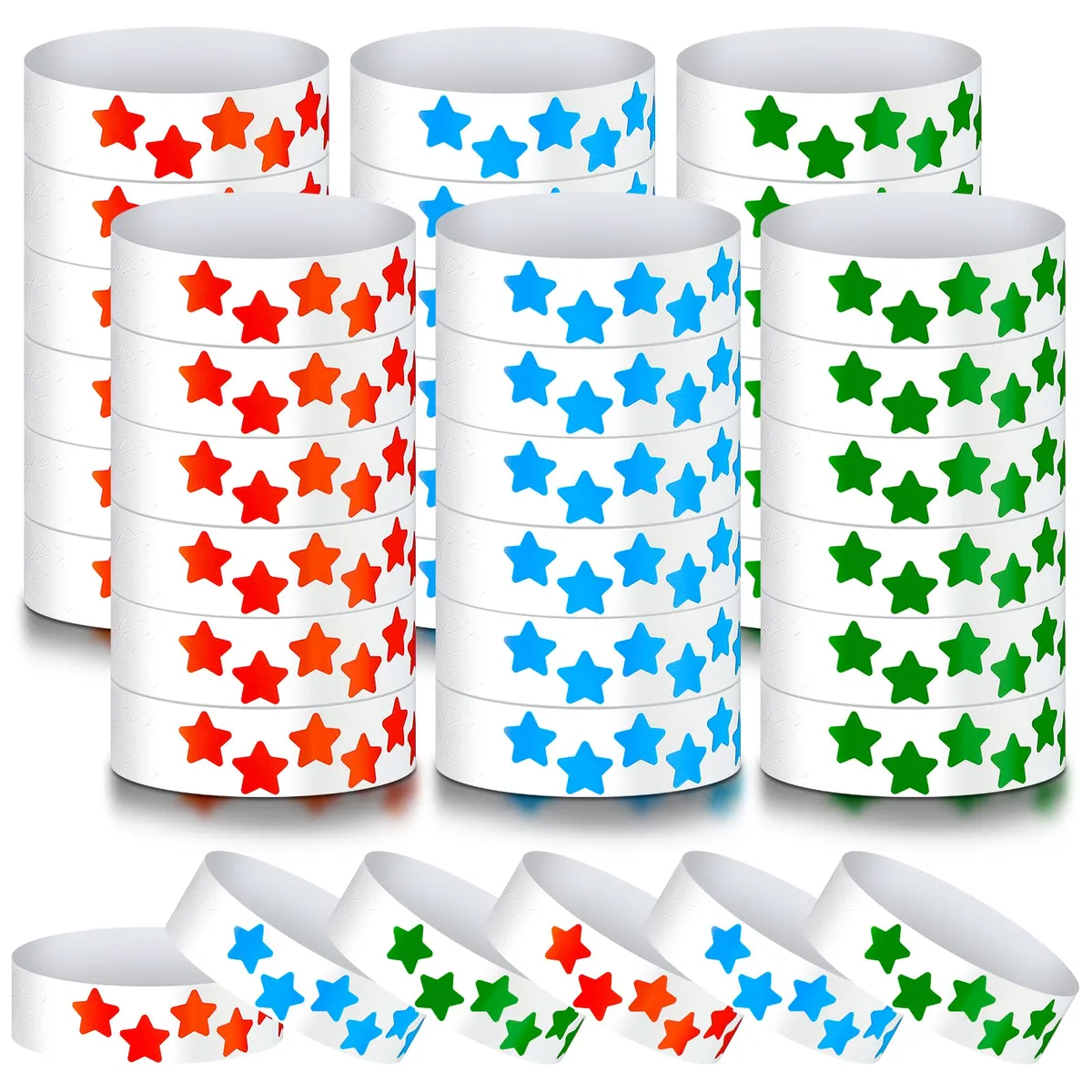
Keep the scheme short. Three or four colors are easy for staff to learn in a minute before doors open. Six is the practical limit for a busy door, and our neon bands come in exactly six: red, yellow, blue, green, orange and pink. Write the color key on a card at each door and at the bar, so nobody has to guess.
Change colors if you run the same event again next month. A guest who kept last month’s band should not get in on it. Rotating colors costs nothing and closes that gap.
Over 21 bands and the ID check
Over 21 bands are the workhorse of bars, beer gardens and any event that serves alcohol to a mixed crowd. The reason is the law, and the CDC puts it plainly:
“The MLDA in the United States is 21 years. This means that alcohol cannot be sold to people younger than 21.”
That rule has been national for a long time. The CDC adds that before a 1984 federal law, the age varied:
“Before the National Minimum Drinking Age Act of 1984, the MLDA could differ by state.”
A band does not check anyone’s age. It records that a person at the door already did. The flow is simple: check the ID once at the entrance, put an over-21 band on guests who qualify, and let the bar serve anyone wearing one without asking again. That keeps the bar line short and keeps the check consistent, because one trained person does it instead of every bartender.
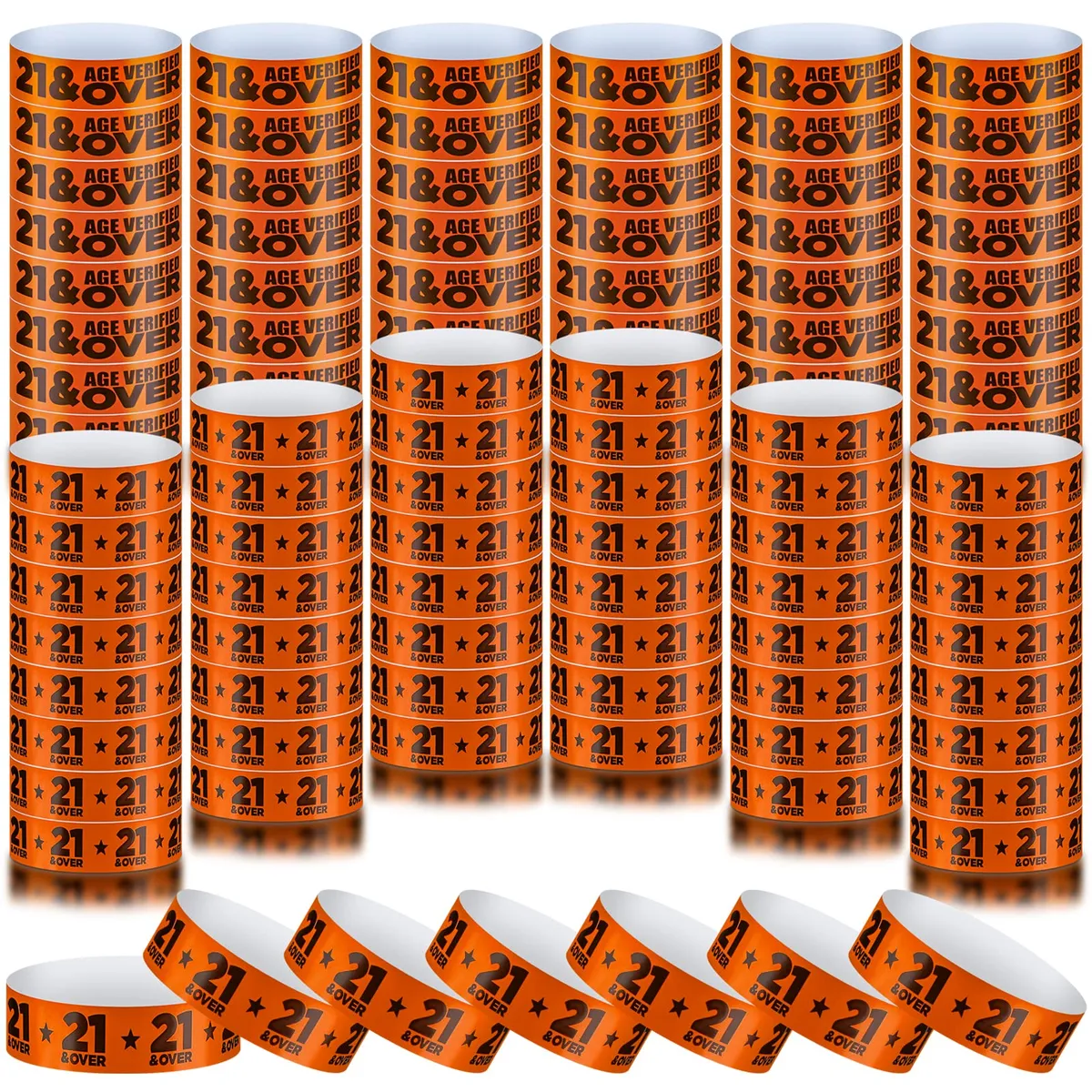
Our over 21 paper wristbands come in packs of 600 or 1,200, in single colors or mixed. A bar that runs the system nightly goes through a pack of 1,200 faster than you would think, so the larger pack is the common choice there. Rules on serving, checking ID and liability differ by state and by venue license, so follow your local rules. The band is a tool for that process, not a substitute for it.
A night at the bar, step by step
Here is how a typical over-21 routine runs at a bar or a beer garden. The door opens with a stack of bands in the night’s color, a light for reading IDs, and a pair of scissors. Each guest shows an ID. If the ID passes, the door staffer puts a band on the guest’s left wrist, sized and sealed. Guests under 21 get in without a band, or with a band in a second color if the venue marks them.
At the bar, staff serve anyone with the night’s band and ask for ID only when something looks off. At closing, the door counts the unused bands, so the manager knows roughly how many people came through. Next week, the color changes. The routine is simple enough that a new staffer learns it in one shift, and that simplicity is what keeps it consistent.
How many bands to order
The math is short: guests, times days, plus a buffer. The buffer covers bands that tear while someone fumbles the backing, guests who arrive after you counted, and staff who need one too. We use one in ten. A busy door with untrained volunteers may want more.
| Event | Guests | Days | Bands to order | Packs of 500 | Packs of 600 |
|---|---|---|---|---|---|
| House party | 40 | 1 | 44 | 1 | 1 |
| Wedding after-party | 120 | 1 | 132 | 1 | 1 |
| School carnival | 300 | 1 | 330 | 1 | 1 |
| Bar night with an over-21 check | 250 | 1 | 275 | 1 | 1 |
| Two-day fair | 400 | 2 | 881 | 2 | 2 |
| Weekend festival | 800 | 3 | 2640 | 6 | 5 |
Two notes on the table. A multi-day event needs a new band each day if you change colors daily, which is the safer way to run it. And staff count as guests: a crew of 20 at a fair adds 20 bands per day.
Pack sizes decide the final order. Our plastic VIP bands come 500 to a pack, our VIP paper bands 200 or 600, and our neon and over 21 bands 600 or 1,200. Round up to whole packs. Leftover bands keep in a dry drawer for the next event.
What bands cost per guest
Bands are one of the cheapest lines in an event budget, but the per-guest cost varies more than people expect. Paper bands in large packs cost a few cents each on our last update. Plastic VIP bands cost more per band, still well under the price of a printed ticket. The comparison table above shows the price per band for each pack, worked out as the pack price divided by the count.
A simple way to budget is to price the event in bands per guest per day, then multiply. A 300-guest school carnival with one day of entry and a one-in-ten buffer needs 330 bands. In paper, that is a single pack of 600 with plenty left for next year. In plastic, it is a pack of 500. The difference in cost is real but small next to the rest of the budget, so let the look and the job decide.
Setting up the door
- Pre-sort the bandsCount out bands by color into small bags of 50 before doors open. Counting from a bag is faster than tearing them off a pile.
- Put a card at the doorOne card with the color key: which color means what. Tape a sample band next to each line.
- Use two people at a busy doorOne checks tickets or IDs, the other puts on bands. The line moves twice as fast.
- Band the left wristPick one wrist for everyone, usually the left, so bar staff and security know where to look.
- Keep scissors at the doorFor the guest whose band sealed too tight, or the one who needs to switch to a different color.
If the event has re-entry, tell guests at the door: keep the band on to come back in. It sounds obvious, but someone always cuts their band off in the parking lot and then asks to get back in.
Briefing volunteers in five minutes
Many events run their door with volunteers who have never put on a wristband. A five-minute briefing before doors open saves an hour of confusion later. Cover four points and hand each volunteer a sample band to practice on.
- The color key: what each color means, and which wrist it goes on
- How to size a band: wrap, check one finger of room, then peel and press
- What to do with a torn band: cut it off, put on a new one, drop the old one in a bag
- Who to call when someone argues: the person in charge, not the volunteer
Let volunteers band each other first. It takes a minute, and by the third band everyone has the knack. It also means the door team is banded too, so security knows who belongs behind the table.

Re-entry, lost bands and the guest who cut theirs off
Decide your re-entry policy before the event, not at the door at midnight. The common policy is simple: the band is your ticket back in. A guest who leaves with an intact band comes back without a second check. A guest who cut theirs off, or arrives with a band that has clearly been moved, goes back through the full entry check.
Some events add a second mark for re-entry, like a hand stamp. That covers the guest whose band tore by accident. It also costs a second step at the door, so use it only when re-entry is heavy, such as an all-day fair with a parking lot outside.
Lost bands happen. Keep a short log at the door: the time, the color handed out and the reason. If a band count runs short at the end of the night, the log shows where the extra bands went.
Bands for staff, vendors and performers
Guests are not the only people at the door. Staff, vendors, performers and their crews all come and go, often through a side entrance. Give them a color nobody else wears, and hand it out at a separate table if you can. It keeps the main line moving and lets security spot crew in the crowd at a glance.
Count crew bands separately, too. Vendors tend to send a helper or two more than they told you, and a dedicated pack for crew keeps the guest count clean. At the end of the night, the two counts tell you how many people were really on site.
Kids, school events and carnivals
School carnivals and fun runs use bands for two jobs: showing who paid for unlimited rides, and showing which adult a child belongs to. For the second job, some schools write a phone number on the inside of the band with a fine marker. Paper bands usually take a marker more easily than glossy plastic.
Neon colors suit kids’ events because they are easy to spot across a playground. Bright bands also help volunteers count children back onto a bus. Bands are event gear, not toys, so keep the spare ones away from toddlers and cut bands off small children when the event ends rather than leaving them on overnight.
Weddings, parties and the holidays
At a private party a wristband does a softer job. It marks who has a drink ticket, who is in the wedding party, or who can go to the after-party upstairs. Plastic VIP bands look right here, since guests keep them on in photos all night. Gold and silver paper VIP bands are the budget version of the same look.

For the holidays, our Christmas wristbands come 500 to a pack, printed with snowflakes, bells, hats and gift boxes, in several styles. They turn an office party or a holiday market into something more festive, and they double as a way to mark who has picked up a gift at a toy drive.
Bands are rarely the only supply on an event list. Hosts who order them often add party napkins, plates and food trays and table decor in the same order, and school events pair them with pencils and markers for the craft table. Our events and concerts page groups them, and the birthday party page does the same for smaller parties at home.
Door prizes and raffles at events
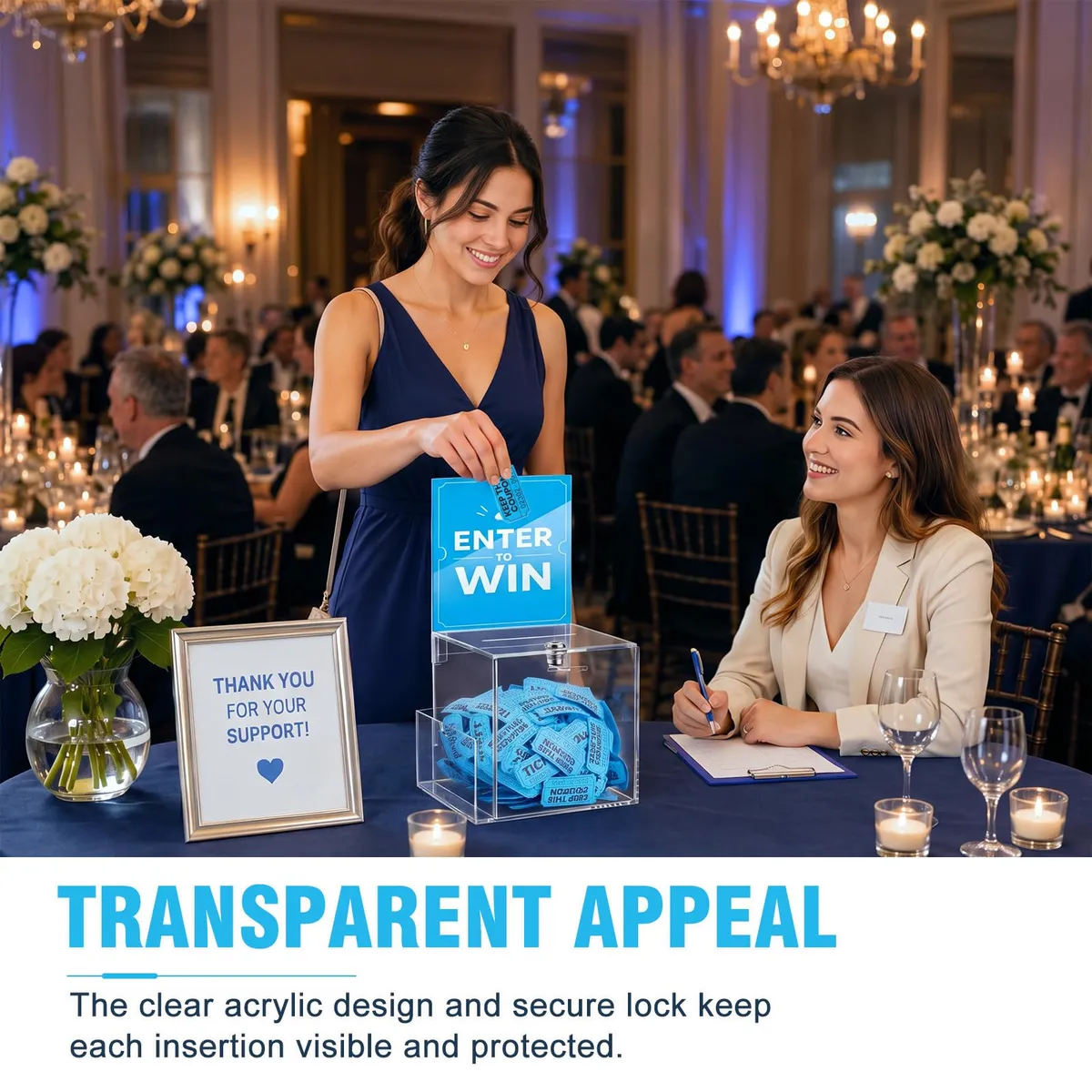
Many events that use wristbands also run a door prize or a raffle, and the two work well together. The band shows who has paid, and the raffle box collects names for the drawing. For a fundraiser where tickets cost money, a locking box keeps the entries safe.
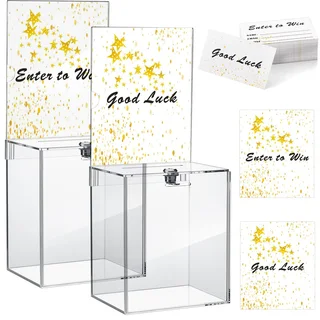
Our enter to win raffle box is clear acrylic, about 6.8 x 6 x 6 inches, with a sign plate, a key lock and 500 tickets. For two stations, the donation boxes with lock and sign plate come as a pair with 200 tickets. Rules for paid raffles differ by state, so check yours before you sell tickets.

A planning timeline
Bands are easy to forget until the week of the event. Order them with the rest of the supplies, three to four weeks out, so a late delivery does not leave the door team with a guest list and a pen. Decide the color key when you order, not on the day. Two weeks out, brief the team leads on the system. On the day, pre-sort bands into bags of 50 by color before the doors open.
Storing bands between events
Unused bands keep well if you treat them like stickers. Store them flat, in their bag or a zip pouch, in a dry place at room temperature. Heat and humidity are the enemies of the adhesive tab: a pack left in a hot car can stick to itself, and the backing gets hard to peel.
Label the bag with the color and the count. When the next event comes up, you will know at a glance whether you need to reorder. And keep the colors you used last time apart from the rest, so you do not hand out last year’s band by accident.
Pool parties and water parks
Water is where band material matters most. A plain paper band softens and tears once it gets soaked. Our bands are sold as waterproof: the plastic VIP bands, the coated paper VIP bands and the polyethylene fiber neon bands all list water resistance, and the over 21 bands mention rainy days and swimming. That still does not make a one-day band a week-long one, but it does mean a pool party or a water park visit will not dissolve the system by lunchtime.
At a pool, band the wrist rather than the ankle. Ankle bands collect sand and come off under fins and water shoes. Ask guests to pat the band dry when they get out, which keeps the adhesive tab from lifting at the edge.
When a guest does not want a band
Some guests find a band uncomfortable or simply do not want one on. Have a fallback ready so the door does not stall. A paper ticket, a hand stamp or a name on a list all do the job for one guest. The aim of the band is a fast, fair door, and a guest who prefers a ticket should not slow that down or feel singled out.
Mistakes we see, and what to do instead
- Ordering exactly one band per guest. Torn bands and late arrivals eat the margin fast, so add one in ten.
- Using one color for a multi-day event. Guests keep bands on overnight, and day two turns into a free pass.
- Sealing before sizing. The adhesive grabs on contact, so size the band first.
- Treating a band as an ID check. The band shows that someone checked, it does not replace the check.
- Leaving the color key in someone’s head. Tape it to the door and to the bar.
When adhesive bands are the wrong choice
Adhesive event bands are made for a day. They are the wrong tool for a week-long festival where guests sleep, shower and swim in them. For that, cloth bands with a locking bead last longer, cost more per band and need a different supplier. Our bands are waterproof, but they are designed to be cut off after the event, not worn for seven days.
They are also the wrong choice when you need to know exactly who someone is. A band is anonymous. For a conference with name checks or a venue that needs to track individual guests, use name badges instead. Our badge reels and lanyards pair with printed badges for exactly that job.
For everything else, the rule is easy. Choose plastic when the band should feel special, paper when the count is large, and color to do the checking for you. Then order guests times days, plus one in ten. Browse all our event wristbands, or read our guide to running a diaper raffle if the next event on your list is a baby shower.
Questions about events
Can event wristbands be taken off and put back on?
Not the adhesive kind: our event bands are cut off after use and cannot be closed again. Plan 1 band per guest per day.
How tight should an event wristband be?
Snug enough that it cannot slide over the hand and loose enough to fit 1 finger underneath. Size it before you peel the backing.
Is a wristband enough to prove someone is over 21?
No. A band only shows that someone at the door checked an ID, and the CDC notes that alcohol cannot be sold to people younger than 21.
Sources
- Centers for Disease Control and Prevention, Why A Minimum Legal Drinking Age of 21 Works, read October 23, 2026
- Centers for Disease Control and Prevention, Why A Minimum Legal Drinking Age of 21 Works, read October 23, 2026
More Teling guides

How to Run a Diaper Raffle at a Baby Shower
Tickets, the box, the prize and the wording on the invitation, step by step, with a table of how many diapers a raffle actually brings in.
Report Covers, Pocket Folders or Binders: Which One for the Job
Prongs, sliding bars, clamps and zippers compared by sheet capacity, durability and what a teacher or a client sees first.